
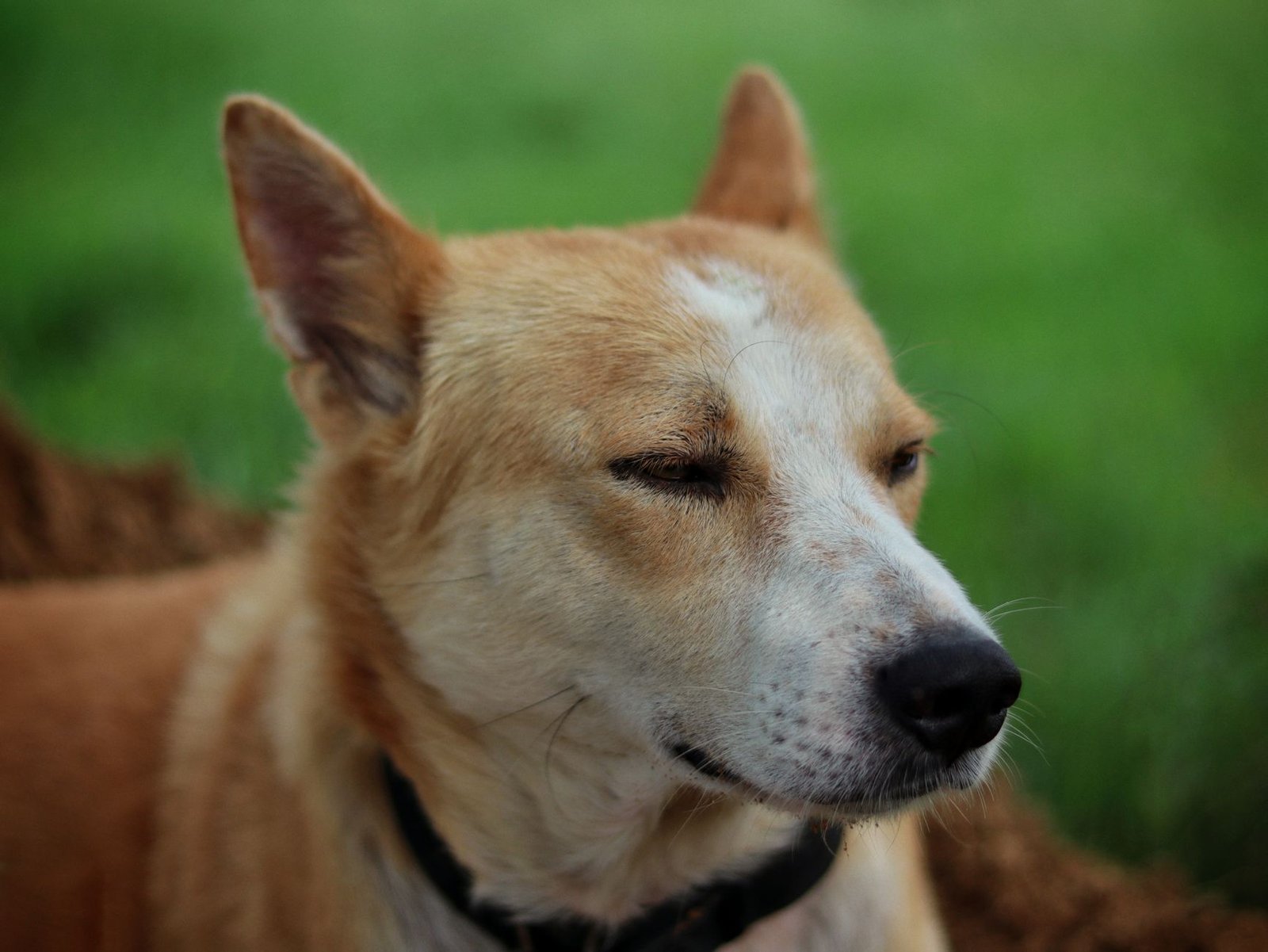
Four signs mean an eye needs looking at today: squinting or holding the lid shut, cloudiness, redness, and discharge. An eye has almost no margin. A surface scratch can deepen over a day or two, and pressure problems can cost vision within hours to a day. Never put in drops left over from something else.
Why eyes are different from the rest of the body
Most things that go wrong with a pet give you some room. A limp can be watched for a day. A single vomit can be watched for an evening. An eye does not work that way, for two reasons.
The cornea, the clear front surface, is only a little over half a millimeter thick in a dog. An injury that starts as a shallow scrape can erode deeper over twenty-four to forty-eight hours, and once it goes all the way through, the eye is in a very different situation. The second reason is pressure: when the drainage inside an eye fails, the pressure climbs, and that is both intensely painful and capable of destroying vision within hours to a day.
So the useful rule with eyes is not to judge severity, because you cannot see most of what matters. It is to notice the signs and let us look.
The four signs, and what each one usually means
Squinting, or holding the eye shut. This is pain, and it is the one owners most often underestimate. A pet who will not open an eye fully is telling you it hurts. Often there is tearing with it, and sometimes the third eyelid comes partly across.
Cloudiness. A cornea that looks hazy, steamy or bluish has fluid in it where there should be none. That happens with surface injury and it happens with a pressure problem, and those two go in different directions, so it needs distinguishing.
Redness. Either the white of the eye, the lining of the lids, or both. On its own it can be mild irritation. With pain or cloudiness it is not.
Discharge. Watery, mucoid or thick. Volume matters less than whether it comes with squinting, redness or a change in appearance.
Add one behavior: rubbing or pawing at the face, or dragging the face along carpet. That is both a sign and a hazard, because a pet rubbing an injured eye makes a shallow problem deep. Stop the rubbing however you can, and a cone from us is better than a pet who spends the evening working at it.
The ones that cannot wait until tomorrow
An eye out of the socket. Displaced forward, with the lids behind it. Usually trauma, and much easier in short-nosed breeds whose eye sockets are shallow. Keep it moist with sterile saline, or a sterile eye lubricant if you have one, and only plain clean water if you have nothing else. Do not push it back, cover it loosely with a damp cloth, and go now.
A sudden, intensely painful eye with a cloudy or bluish cornea and a wide pupil that does not shrink in light. That pattern suggests pressure inside the eye has climbed, and vision can be lost within hours to a day. Pressure problems, an eye out of the socket and a chemical splash are the three where minutes genuinely count.
A red, painful eye with a pupil that is smaller than the one in the other eye. That pattern points to inflammation inside the eye rather than on the surface. It is as urgent as a wide pupil, it looks almost identical from outside, and the two go in opposite directions, so it needs a pressure reading rather than a guess.
A chemical splash. Flush immediately with sterile saline or lukewarm water, for a full fifteen to twenty minutes, then come in. Do not stop early because the eye looks better; the flushing is the part that limits the damage.
Any penetrating injury, including a cat scratch to a dog’s eye. Cat claws reach deep and carry contamination, and a scratch that looks like a line on the surface can have gone further.
Sudden blindness. Bumping into furniture, hesitating at steps, wide pupils that do not respond. In an older cat this is often high blood pressure causing the retina to detach, and that in turn often points at the kidneys or the thyroid. Caught within the first few days and with the blood pressure brought down, most of those cats get useful vision back. The longer the retina stays detached the less comes back, so this is not a wait-and-see.
Unequal pupils. One wide and one small, in the same light. That can be an eye problem or a nerve problem, and either is worth same-day attention.
The leftover-drops problem
This is the single most important piece of advice here, and it is the one most often ignored because it feels helpful.
Do not put anything into your pet’s eye that was not given to you for this eye, this time. Not a bottle left from a previous problem, not a bottle from your other pet, not a human eye drop from the bathroom cabinet.
The reason is specific rather than general caution. Some eye drops contain an ingredient that is genuinely useful for certain inflammatory conditions and is actively harmful if there is a surface ulcer: it slows healing and can allow a shallow ulcer to deepen and the eye to perforate. You cannot tell by looking whether there is an ulcer, because the most common kind is invisible without a dye stain under a blue light. That is why the examination comes first and the bottle comes second, and why the same bottle that helped in March can cost an eye in October.
Plain sterile saline to flush is fine. Nothing else.
What you can safely do before you come in
- Stop the rubbing. A cone if you have one, otherwise hold them gently and keep them calm and quiet.
- Flush only if something went in. Sterile saline or lukewarm water, generously, for fifteen to twenty minutes for a chemical, briefly for grit or dust.
- Dim the room. A painful eye is light-sensitive and this is a genuine kindness.
- Leave the eye alone otherwise. Do not try to remove anything embedded, do not hold the lids open to inspect it repeatedly, and do not apply anything.
- Photograph it in good light if you can do so without a flash and without wrestling your pet.
- Note when it started and anything that happened beforehand: a walk in tall grass, a scuffle with a cat, a swim, a new cleaning product.
- Call us before you leave so we are expecting you.
Come in through our urgent care. Our eye and ear care team does the parts you cannot do at home: a dye stain to show up an ulcer that is otherwise invisible, an eye pressure check and a tear production measurement. Those three tests are what separate the conditions that look alike. The same team manages what follows and the recheck, and rechecks matter more with eyes than almost anywhere else because the picture changes day to day. Where an eye needs more than that, our surgical services team handles it.
We are open 8:00 AM to 7:00 PM Monday through Saturday, and we are closed before 8:00 AM, after 7:00 PM and all day Sunday. Those gaps are what matter here. An eye problem that starts in the evening or on a Sunday should not wait for the next morning: a shallow ulcer can deepen in that window, and a pressure problem can take vision in it. If you see squinting, cloudiness, a wide unresponsive pupil, an eye out of its socket, sudden blindness or a chemical splash when we are closed, go to an open emergency veterinary hospital and call ahead before you leave. Eyes are the clearest case in this whole practice for not waiting out a weekend.
Our guide to red flag days and a Walnut Creek evacuation plan covers a different kind of urgency, and the one thing both have in common is that the number for an open emergency hospital is worth having written down before you need it.
Breeds and situations with less margin
- Short-nosed breeds. Pugs, bulldogs, Boston terriers, Persian cats. Shallow sockets, prominent eyes, often an incomplete blink and reduced corneal sensation, which means they both injure eyes more easily and feel it less, so they show up later.
- Dogs who run in tall grass. Grass seeds and plant material lodge behind the lids and under the third eyelid, and a dog can be squinting with nothing visible from outside.
- Older pets. Pressure problems, retinal changes and tear production problems all become more likely with age.
- Dogs who live with cats. Claw injuries to the eye are common and deeper than they look.
- Pets with ongoing skin or allergy problems, who rub their faces and often have inflamed lids.
- Cats with a history of respiratory virus, who can get recurring surface ulcers years later.
Questions we are asked
My dog’s eye is watering and he is squinting, but it looks normal otherwise. Can it wait a day?
Those two signs together are the ones we would rather see today. Squinting means pain, and the most common painful eye problem in dogs is a surface ulcer, which is invisible without a dye stain, so “looks normal” does not rule it out. The reason not to wait is that an ulcer can deepen over twenty-four to forty-eight hours, and a shallow one is a straightforward problem while a deep one is not.
Can I use the drops you gave us last year for the same thing?
Please do not, even if it looks identical. Some eye drops contain an ingredient that helps certain inflammatory conditions and makes an ulcer substantially worse, allowing it to deepen and potentially perforate. Because you cannot see an ulcer without a dye stain, using a leftover bottle is a gamble with the eye. Bring the bottle with you so we know what you have, and we will tell you whether it is the right one this time.
What is the dye test and why does it matter?
A drop of orange dye goes on the surface and we look with a blue light. Healthy cornea does not hold the dye; a scratch or ulcer does, and lights up green. It takes seconds, most pets barely react to it, and it is the first thing we do with a painful eye, because it tells us immediately whether the surface is broken. Paired with a pressure reading it separates a surface injury from a pressure problem or an inflammation inside the eye. Those look similar from outside and are handled completely differently.
My cat’s eye is half closed with some discharge and she is sneezing. What is going on?
That combination suggests one of the respiratory viruses cats carry, and it still needs to be seen rather than waited out. The reason is that some of those viruses cause corneal ulcers directly, and a cat squinting is a cat in pain. There is also a specific trap here: this is exactly the situation in which leftover drops from another problem do harm, because the wrong ingredient makes a viral ulcer considerably worse.
He got dust or a seed in his eye on a walk. Is flushing enough?
Flushing is the right first step and is often enough for loose dust. Use sterile saline or lukewarm water and be generous. What changes the answer is what happens next: if he is still squinting, still tearing, or pawing at it twenty minutes after a good flush, something is probably still there or the surface has been scratched. Plant material lodged under the third eyelid is common after a run in tall grass and usually cannot be seen or reached from outside.
How urgent is a cloudy eye with no obvious pain?
Still worth a same-day call, because you cannot tell from outside which layer has gone cloudy. In an older pet it is often an age change in the lens, which is not urgent on its own. But the same appearance can come from fluid in the cornea after a surface injury, from inflammation inside the eye, or from raised internal pressure, and those three do need identifying early. Some pets, particularly short-nosed breeds and stoic cats, show remarkably little pain with a genuinely significant problem.
Does an eye injury affect the other eye?
Not directly in most cases, but it is a fair question because several of the underlying causes are not one-sided. Tear production problems, pressure problems and the high blood pressure that detaches retinas in older cats all tend to involve both eyes eventually, even if only one is symptomatic now. That is part of why we examine both eyes and often check blood pressure in an older patient, rather than only looking at the eye you brought in.
Speak to the team at Rossmoor Pet Hospital
If your pet is squinting, has a red, cloudy or discharging eye, is rubbing at their face, or has suddenly started bumping into things, call us and come in today. We are closed Sunday, so on that day and after we close go to an open emergency veterinary hospital and call ahead before you leave.
Published by the team at Rossmoor Pet Hospital.
This article is educational in nature and is not a replacement for hands-on assessment of your own pet by a veterinarian.
Rossmoor Pet Hospital
1910 Tice Valley Blvd, Walnut Creek, CA 94595
Phone: (925) 322-2262
Email: rossmoorph.staff@gmail.com
Hours: Monday to Saturday 8:00 AM to 7:00 PM; closed Sunday