
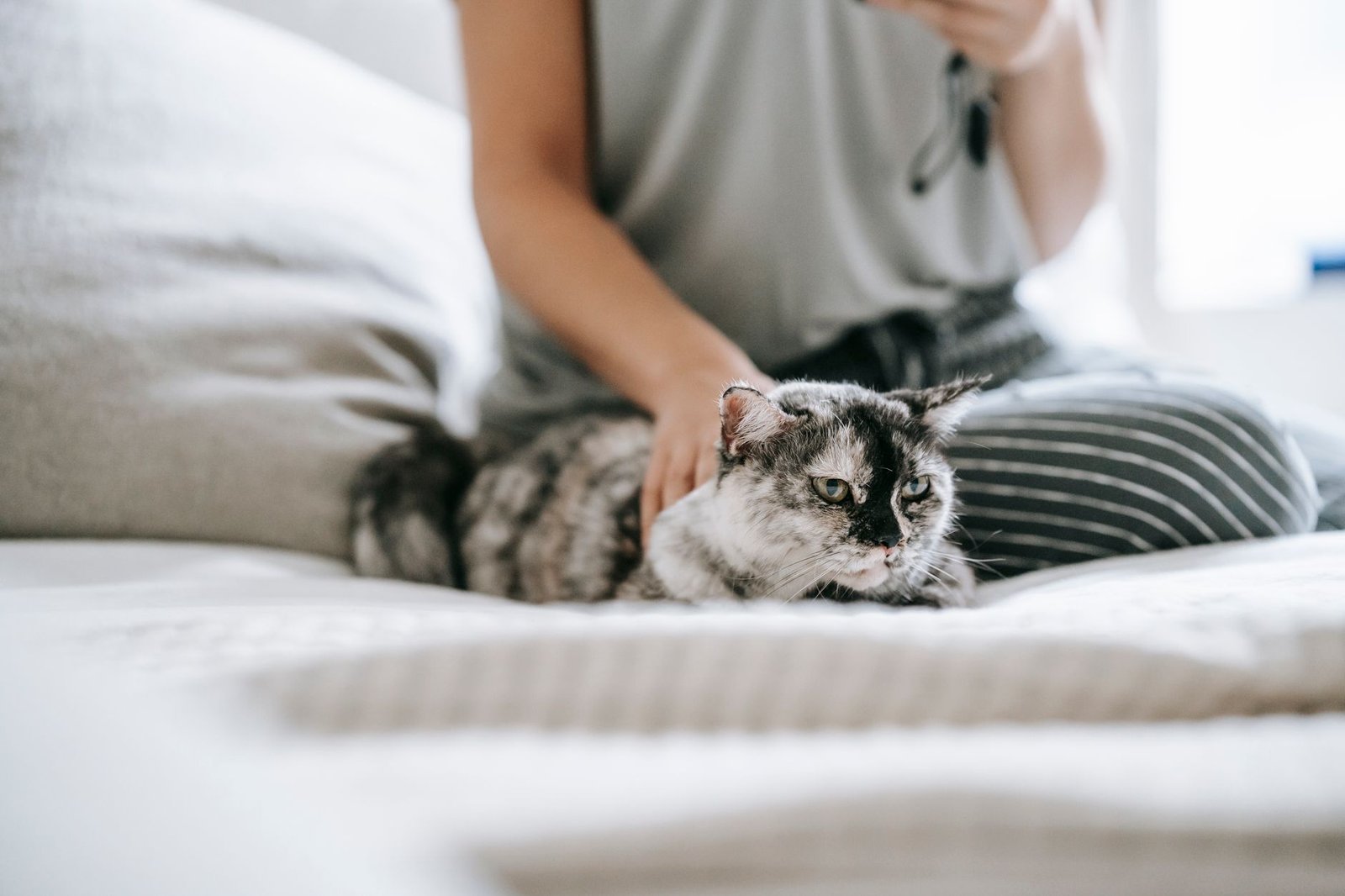
Cooler weather does not cause joint disease, but it reliably reveals it. Pets that moved comfortably through summer start rising slowly, hesitating at steps and sleeping more. In cats the signs are quieter still. Early assessment matters, because comfort and muscle are far easier to protect than they are to rebuild later.
Why owners notice it now
Joint change is gradual. It develops over months and years, and a pet compensates so smoothly that the person living with them every day is the least likely to spot it.
Two things change in the fall. Mornings and evenings get genuinely cool in Walnut Creek even while the afternoons stay warm, and cold stiff tissue does not move as freely. And activity drops, because the long light evenings that made a second walk easy are gone.
Less activity means less muscle, and muscle is what holds a joint stable. A pet that has been quietly managing an uncomfortable joint through an active summer suddenly has neither the warmth nor the conditioning to hide it.
So the pet has not deteriorated overnight. The problem has been there a while. Fall is simply when it becomes visible.
What to look for in a dog
Limping is the sign everyone knows and one of the last to appear. The earlier ones get misread as aging.
- Slow to rise, particularly after sleeping
- Stiff for the first few minutes of a walk, then loosening up
- Worse the morning after a long or unusually active day
- Hesitating at steps, at the car, or at the jump onto a couch or bed
- Sitting down partway through a walk, or lagging on the way home
- Standing with the weight shifted forward, or sitting with a leg out to one side
- Reluctance to play, or stopping earlier than before
- Licking repeatedly at one joint
- Grumpiness when touched, brushed or lifted
- Losing muscle over the hind end while the front stays broad
None of this is the same as a dog simply getting older. A comfortable older dog slows down. An uncomfortable one changes how it does things.
Cats are much harder, and missed far more often
Joint change is extremely common in older cats and picked up far less often than in dogs, because cats do not limp in a way owners notice. They simply stop doing things.
- No longer jumping to a favorite windowsill, counter or bed, or taking a lower route to get there
- Hesitating before a jump, or scrabbling on landing
- Using stairs less, or taking them one at a time
- A coat that has become scruffy or matted over the back and hips, because grooming that far back has become uncomfortable
- Overgrown claws, because they are scratching less
- Missing the litter box edge, or avoiding a box with high sides
- Sleeping in new, lower places
- Becoming less tolerant of handling, or hiding more
A cat that has quietly stopped getting onto the bed is telling you something. Litter box changes in particular get read as behavioral when they are frequently physical, and our guide to urinary incontinence in senior dogs covers the other common reason for accidents in an older pet.
The weight conversation, honestly
This is the single most useful thing an owner can influence.
Extra body weight increases the load through every joint at every step, and fat tissue is biologically active in ways that add to joint inflammation. A pet carrying even a modest amount of extra weight is working noticeably harder than one at a lean weight.
The good news is that this cuts both ways. Weight reduction is one of the most effective things available for a stiff pet, it costs nothing, and owners often see the difference within weeks. It is also the thing most likely to be delayed because it is nobody’s favorite conversation.
Fall is exactly the wrong time to let it drift, because activity is falling while food usually stays the same. If you are unsure whether your pet is at a healthy weight, ask us to show you how to check by hand. Two minutes, and more reliable than the scale alone.
What we do at an assessment
The first part is watching. We want to see your pet walk and turn, ideally on a non-slip surface, before anything else. A video of your dog on a normal walk, or your cat moving around at home, is genuinely useful, because many pets move differently in a hospital than in their own kitchen.
Then a hands-on exam of each joint through its range of motion, along with the spine and the muscle over the hind end. Our medical services team is looking for which joints are involved, how much movement has been lost, and where the discomfort sits.
Imaging through our pet diagnostics is often the next step, because several quite different conditions look similar from the outside. Joint change, a soft tissue injury, a back problem and a few less common conditions all produce a stiff, reluctant pet and are approached differently. In older pets we frequently run bloodwork alongside.
What we will not do is decide anything from a description over the phone. Please bring your pet in rather than asking what to give.
What genuinely helps at home
- Traction. Runners and rugs across tile, laminate and hardwood, especially between bed, food and door. Slipping is frightening and makes pets brace, which makes stiffness worse
- Warmth and a good bed. A supportive bed away from drafts and off cold floors. Many pets are noticeably better in the morning after a warmer night
- Ramps and steps for the car, couch or bed, and a lower-sided litter box for cats
- Steady, moderate exercise rather than nothing midweek and three hours on Saturday. The weekend blowout is a common cause of a bad Monday
- Warm up and cool down. Five minutes of gentle leash walking before letting a dog run, and again before stopping
- Keep nails short. Long nails change how a pet stands and loads its joints
- Raise food and water bowls for a pet that finds bending down uncomfortable
These changes are cheap, immediate, and in combination often make a visible difference within two weeks.
The mistake worth avoiding
Please do not give your dog or cat anything from your own cabinet, from a store shelf, or from a friend whose dog has the same problem. Products intended for people are dangerous to pets at amounts that seem trivial, and cats in particular have very limited ability to process many of them. What suits one pet can be actively harmful to another with different kidneys, a different liver or a different weight.
Supplements sold for joints are not risk free either, and quality varies enormously. If you want to use something, ask us first rather than afterward.
Frequently asked questions
My dog is stiff first thing but fine after ten minutes. Worth a visit?
Yes, and it is one of the most useful things to come in about. Stiffness that eases with movement is a classic early sign, and pets at that stage have the most to gain. Waiting until it lasts all day means muscle has already been lost.
Is it just old age? She is thirteen.
Age is not a condition. A comfortable thirteen year old slows down but keeps doing the things she enjoys. One that has stopped using the stairs, stopped greeting you or stopped playing has usually changed for a reason, and many of the reasons can be helped.
Does cool weather really make joints worse?
Owners report it consistently enough to take seriously, whatever the mechanism. What is certain is that cold tissue moves less freely and that shorter evenings mean less activity and less muscle. Those two alone explain a fall decline.
Should my stiff dog rest completely?
Usually not. Complete rest costs muscle quickly, and muscle protects the joint. Most stiff pets need consistent moderate activity rather than either extreme. We will give you specific guidance, because the right amount depends on what is going on.
My cat has stopped jumping onto the bed. Is that a joint problem?
It might be, and it is one of the most common ways it shows up in cats. It can also reflect vision changes, weakness or other conditions, so it is worth investigating rather than assuming. Cats hide discomfort exceptionally well.
Can anything actually be done, or is this managing decline?
A great deal can be done, and the earlier it starts the more there is to work with. Weight, activity, home environment and veterinary care together make a substantial difference to comfort and to how long a pet stays mobile. This is not a wait-and-see situation.
Speak to the team at Rossmoor Pet Hospital
If your dog or cat has slowed down since the mornings cooled, book an assessment rather than putting it down to age. Call us on (925) 322-2262.
Published by the team at Rossmoor Pet Hospital.
This article is for general educational purposes only and is not a substitute for an in-person veterinary examination or advice about your individual pet. If you have an urgent concern about your pet, contact Rossmoor Pet Hospital or your nearest emergency veterinary hospital right away.
Rossmoor Pet Hospital
1910 Tice Valley Blvd, Walnut Creek, CA 94595
Phone: (925) 322-2262
Email: rossmoorph.staff@gmail.com
Hours: Monday to Saturday 8:00 AM to 7:00 PM; Sunday closed